If you’re reading my blogs, you may be at the point when you’re ready to do something about your state of fitness. If you’re already training, maybe you’re ready to step it up a notch. If you’re not training, maybe you’re ready to start. High blood pressure, diabetes, osteoporosis liver fat build up, muscle loss … these things don’t go away on their own. So it only stands to reason that you would want to take action. Hiring a Personal Trainer may NOT be the best first step however.
As a Personal Trainer, I’m probably shooting myself in the foot here, but I’ll gladly do it because I hate to see people hire a trainer when what they need is a physical therapist. I see so many older folks, limping and hobbling around with the same Personal Trainer year after year. They’re hobbling because they have underlying imbalance, postural and muscular issues that cannot be corrected with exercise.
Will exercise help them? YES. Will they make significant improvements without correcting the underlying issue? NO. In fact, training without addressing an underlying issue can cause further damage … especially if the trainer is uncertified or new, and has absolutely no clue how to perform corrective training. Will trainers happily collect money from imbalanced clients for years without improving their mobility? YES … the greedy ones will.
So let’s find out what different practitioners do, and don’t do.
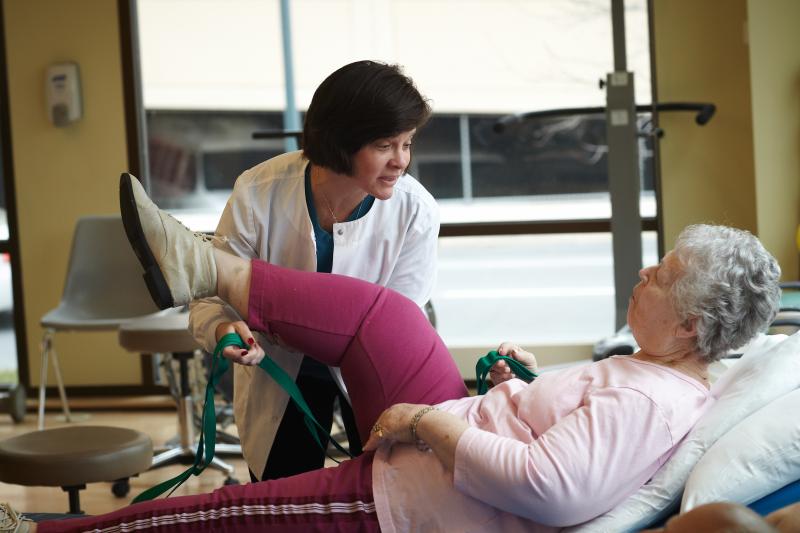
PHYSICAL THERAPISTS
According to The American Council on Exercise, Physical Therapy students spend at LEAST 7 years in formal education; earning first a Bachelor’s Degree in Physical Therapy, kinesiology, sports medicine or a similar field. Then it’s off to graduate school where they’ll earn a Doctorate Degree in Physical Therapy (DPT). Upon completion, they study 8 hours a day for three to six months to pass the NPTE (National Physical Therapy Exam for licensure). Physical Therapists also need to be licensed by the state they practice in and fulfill state requirements such as jurisprudence exams, according to the Bureau of Labor Statistics. They must also take continuing education courses to keep their practice updated to maintain their license.
THE ROLE OF A PHYSICAL THERAPIST
Physical Therapists diagnose, treat and rehabilitate patients
who have an injury or disease that limits their movement. Their job is to help
patients move independently, alleviate pain and prevent disability. They often
work with patients with joint and muscle pain, multiple sclerosis, arthritis,
cerebral palsy, stroke, spina bifida, injury, and post-surgical
conditions.
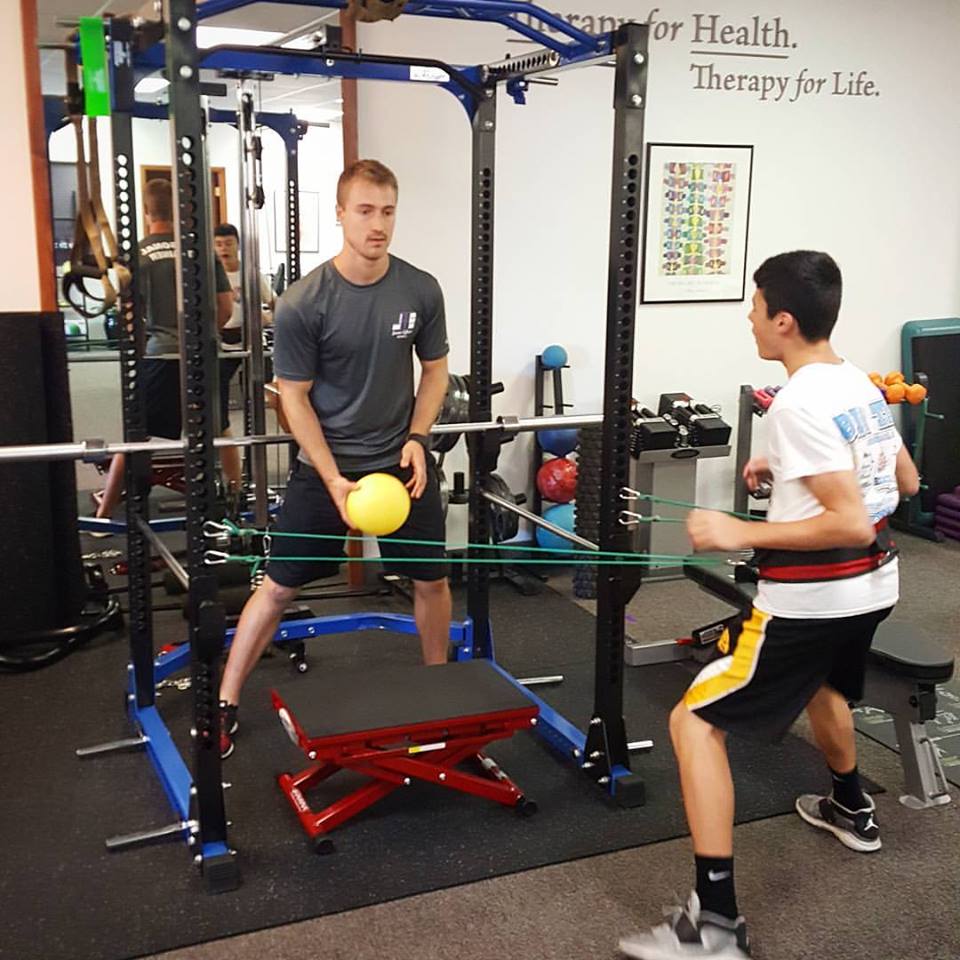
PERSONAL TRAINERS
Welcome to the soapbox, folks. You may be shocked to find out that personal training does not have an educational standard and is self-regulated. Certifications are available, and the most respected of them take 4-9 months of full time study, with a pass rate of around 58%.
Requirements to be a Personal Trainer: 18 years of age. They should also be CPR and first-aid certified. That’s it. There is NO REQUIREMENT for formal education, legitimate licensure or continuing education. The best organizations will offer continuing education, specialty certifications and informative publications for their participants. Reputation is what distinguishes the good organizations from the shoddy ones, but there are no official standards in place.
The fitness clubs decide for themselves who will train their precious members. Some will allow “uncertified” trainers to work at their facility, or they may offer some sort of “quickie certification” to trainer wannabees. These “quickie” certs cost the newbie about $200 and are easily obtained. Heck … I’ve even seen ads online for $79 certifications. Are we shocked? NO.
So your trainer may have a master’s degree in biomechanics with five years of experience working at a clinical setting, or may have a quickie license with no experience whatsoever. If they’re smart, they’ve memorized the “training lingo” very well and can hustle you into a co-dependent relationship that will last for years.
THE ROLE OF A PERSONAL TRAINER
The
role of a Personal Trainers is to design exercise programs and help clients
execute them to maintain or improve their health. If your trainer does not have
a designed program in place for you, ask for one. Besides
programming, Personal Trainers also motivate clients to a healthier lifestyle,
help prevent injuries with proper form and follow through with the client’s
physician or Physical Therapist’s advice. They should also screen clients’ movement
patterns to make sure that they can move freely without pain or limitation.
ARE YOU ON THE RIGHT ROAD?
You
may complain to your trainer about severe back pain, troubles with mobility, diabetes-related
symptoms. These issues blur the line between fitness and medicine, and by law,
your trainer is required to at least suggest
that you see a proper health practitioner. Problems like these are beyond a
trainer’s expertise, and if he/she has your best interest in mind, a
recommendation will be given.
A friend of mine is a Physical Therapist. He has a National Certification in Athletic Training. He has worked with athletic teams on all levels including high school, collegiate and professional. He’s quick to point out the value of both PT and fitness training: “Research shows that Physical Therapy can get you moving better, aligned better and feeling better, but it is exercise that’s going to keep you there, and prevent you from re-injury.”
Lately, he has noticed a decrease in how many PT sessions insurances were willing to cover. He was concerned that he was sending his patients out without the strength they needed to perform activities of daily living. For this reason, he works in tandem with an outside trainer. Working with a trainer allows him to co-monitor a patient who’s just been released from PT.
That
way, he can make training recommendations and keep informed of the patient’s
progress. “We get patients so that
they’re functional again, but we want to take them beyond that … into higher
goals and also the preventative stage. If they don’t continue to maintain and
advance, they’re going to end up back in our clinic with another injury …
somewhere else. The people that are able to continue to exercise stay healthy.
We’re here if they get reinjured, but if we can prevent that from happening …
that’s the whole goal.”
THE BOTTOM LINE
When in doubt, see a Physical Therapist. Don’t rely on your Personal Trainer to perform the work of a Physical Therapist. While PNF stretching and foam rolling are well within the scope of practice for a Personal Trainer, manipulation and massage therapy are not. If you experience significant pain during regular physical activity that others don’t seem to have, it may be time to address then with PT, then return to your Personal Trainer afterwards. By the same token, PT’s are not gods. They can be wrong, and I’ve gone to battle with a few of them regarding squat form, functional movements and strength training. BUT … when the chips are down, your Personal Trainer should be mature enough to realize that the ultimate decision rests in the hands of the licensed health practitioner … and the client of course!
See you at the gym!
Vicki Morgan A.C.E. is a Senior Strength Trainer at Flex Gym. Reach her at seniorstrength.pro. Always consult your physician before beginning any exercise program. If you experience pain or difficulty, stop and consult your healthcare provider. This article is not meant to take the place of any treatment or activity your physician has deemed necessary.
 Senior Strength and Fitness
Great article! Thanks for laying out the facts & the benefits of using both to reach optimum mobility & strength.
Thanks Mary Jo! Coming from you, that means a lot.